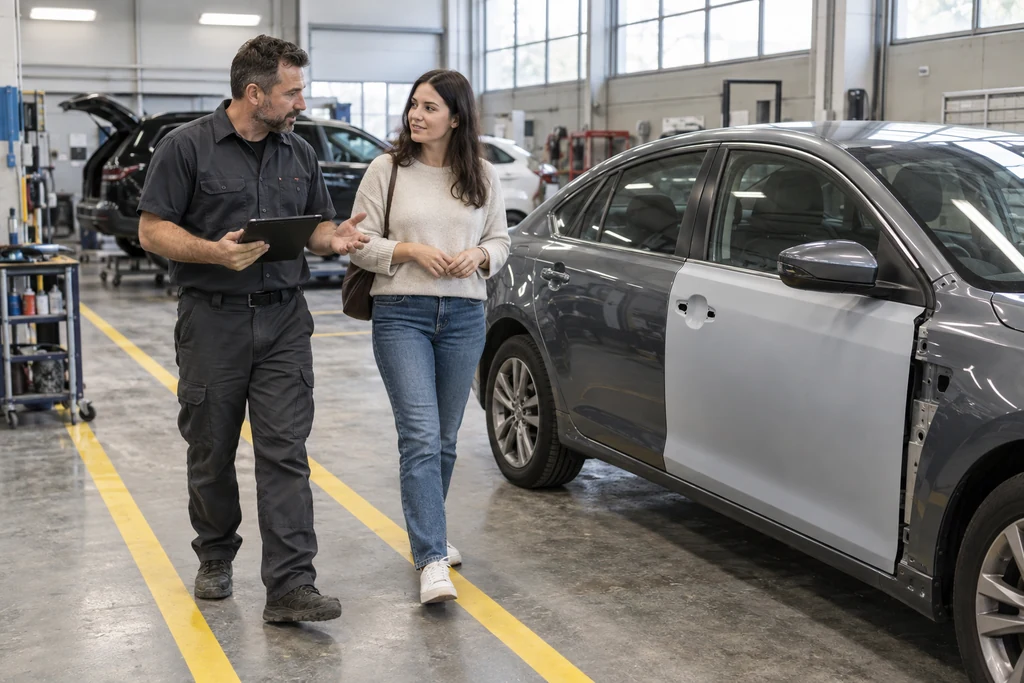
What to Expect During the Collision Repair Process
At Moyer Collision Repair, we know that having your vehicle repaired after an accident can feel overwhelming. Our goal is to make the process as clear and stress-free as possible. From the initial estimate to final pickup, we’ll help guide you through each step, explain what is happening, and keep you informed along the way.
Every repair is different, but most collision repairs follow a similar process. Here is what you can generally expect when your vehicle is repaired at Moyer Collision Repair.
1. Initial Estimate and Vehicle Inspection
The repair process usually begins with an inspection of the visible damage to your vehicle. During this step, we review the areas affected by the accident, take photos, and prepare an initial estimate based on what can be seen before the vehicle is taken apart.
It is important to understand that an initial estimate is not always the final repair cost. Some damage may be hidden behind bumpers, panels, trim pieces, or other components. If additional damage is found later, we will document it and communicate the next steps.
2. Insurance Review and Repair Authorization
If your repair is part of an insurance claim, we can help work through the insurance repair process with you. Your insurance company may review the estimate, photos, and repair details before approving the work.
You have the right to choose where your vehicle is repaired. While an insurance company may recommend a repair facility, the decision is ultimately yours. Once the repair is authorized, we can begin planning the work needed to restore your vehicle.
3. Disassembly and Hidden Damage Review
After repairs begin, damaged parts may need to be removed so we can inspect the structure and components behind them. This step is called disassembly, and it often gives us a much clearer picture of the full extent of the damage.
Hidden damage is common after a collision. A bumper cover, fender, door, or liftgate may look like the only damaged part from the outside, but additional brackets, sensors, reinforcements, or structural components may also be affected underneath.
4. Supplements for Additional Damage
If we discover additional damage during disassembly, we prepare what is called a supplement. A supplement is an update to the original estimate that includes the additional labor, parts, materials, or procedures needed to complete the repair properly.
When insurance is involved, the supplement usually needs to be submitted to the insurance company for review. This is a normal part of the collision repair process. We document the additional damage and work with the insurance company when applicable before moving forward.
5. Parts Ordering and Availability
Once the repair plan is confirmed, the necessary parts are ordered. Depending on the vehicle and the repair, parts may include body panels, lights, brackets, moldings, clips, sensors, glass, wheels, suspension components, or other related items.
Parts availability can affect the repair timeline. Some parts arrive quickly, while others may take longer due to manufacturer supply, shipping delays, backorders, or special-order requirements. We do our best to keep you informed if parts availability affects your completion date.
6. Body and Structural Repair
During the body repair stage, our technicians repair or replace damaged components according to the repair plan. This may include metal repair, panel replacement, bumper repair, alignment of body panels, welding, corrosion protection, and structural repairs when needed.
Modern vehicles are built with advanced materials, safety systems, and manufacturer-specific repair procedures. Our goal is not just to make the vehicle look good, but to repair it correctly so it performs as intended.
7. Paint Preparation and Refinishing
After body repairs are complete, the vehicle moves into the paint preparation and refinishing stage. The repaired areas are carefully prepared, primed, sealed, and refinished using professional paint materials and color-matching processes.
Matching a vehicle’s paint involves more than simply using a paint code. Age, sun exposure, factory variation, paint type, and the location of the repair can all affect the final appearance. Our refinishing process is designed to help the repaired area blend as closely as possible with the rest of the vehicle.
8. Reassembly
Once painting is complete, the vehicle is reassembled. Trim pieces, lights, moldings, handles, emblems, sensors, liners, and other components are reinstalled or replaced as needed.
During reassembly, we check fit, alignment, and function to make sure the repaired areas come back together properly. This step is important because many small details contribute to the final appearance and performance of the repair.
9. Scanning and Calibration, If Applicable
Many newer vehicles include advanced safety and driver-assistance systems. Depending on the damage and repair procedures, your vehicle may require electronic scanning, diagnostics, system resets, or calibrations.
These systems may include features such as parking sensors, blind spot monitoring, lane departure warning, adaptive cruise control, forward collision warning, backup cameras, and other safety-related technology. If scanning or calibration is required, we will include it as part of the repair process.
Not every repair requires calibration, but when it does, it is an important step in helping the vehicle’s safety systems operate as intended.
10. Quality Checks and Final Inspection
Before your vehicle is ready for pickup, we perform quality checks to review the completed repair. This may include checking panel alignment, paint finish, lights, trim, warning indicators, vehicle functions, cleanliness, and overall repair quality.
If anything needs additional attention, we address it before the vehicle is released. Our goal is to return your vehicle to you repaired, clean, and ready to drive.
11. Pickup and Final Paperwork
When your vehicle is complete, we will contact you to arrange pickup. At pickup, we can review the work performed, answer any questions, and complete any remaining paperwork or payment.
If your repair involved an insurance claim, your deductible or any customer-pay portion is typically due when you pick up the vehicle. Your insurance company can confirm your deductible amount and coverage details.
Why Repair Timelines Can Change
We understand that being without your vehicle is inconvenient. While we always want repairs completed as quickly as possible, several factors can affect timing, including hidden damage, insurance approvals, parts availability, repair complexity, paint and refinishing requirements, scanning or calibration needs, and final quality checks.
When changes happen, we do our best to communicate clearly so you know where things stand.
We’re Here to Help
Collision repair can involve a lot of steps, but you do not have to figure it out alone. At Moyer Collision Repair, our team is here to answer questions, explain the process, and help you feel confident from estimate to pickup.
If your vehicle has been in an accident or you would like to schedule an estimate, contact Moyer Collision Repair and we’ll help you take the next step.
LEESPORT, PA 19533
LEBANON, PA 17042
MOYER COLLISION REPAIR is part of MOYER AUTO GROUP
VISIT MOYER.COM